Living with Illness.
The diagnosis was the beginning of something, not the end of it.
In-person therapy in San Diego & online throughout California.
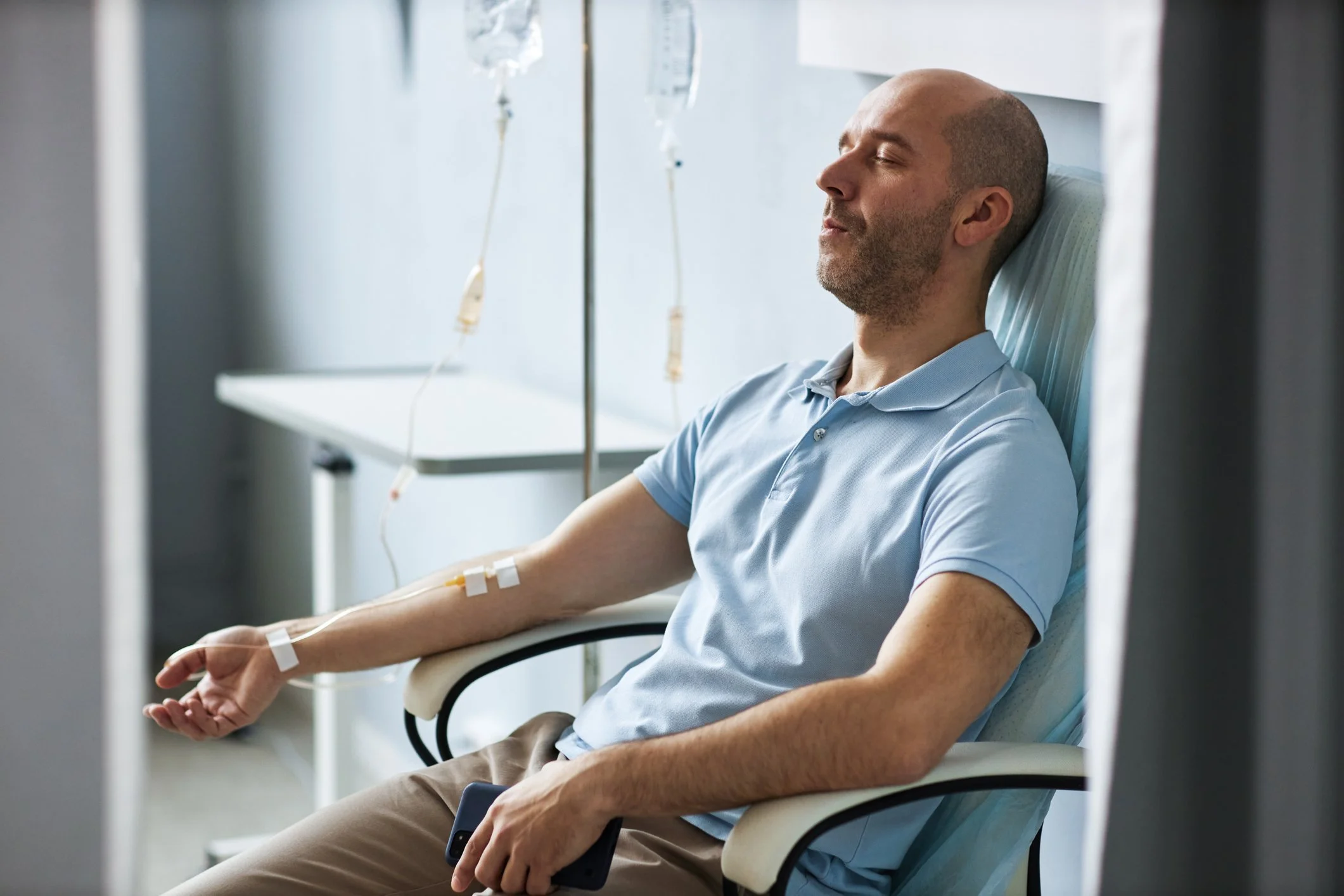
Maybe the call came last week. Maybe it came years ago, and you've been managing it ever since.
Either way, something happened that divided your life into before and after — and most of what changed isn't the part your doctors are treating.
The appointments. The waiting. The way an ordinary Tuesday can suddenly feel borrowed. The people who ask how you're doing and clearly need you to say fine. And underneath it, a question that has nothing to do with medicine: who am I now, and what do I do with the life I still have?
This is a place to say all of it out loud.
It isn't only your health that changed.
Cancer. Heart disease. Dementia. HIV. A diagnosis you're still learning to pronounce. Whatever the word is, it arrived and rearranged things that had nothing to do with your body.
Life hasn't stopped. It just doesn't feel like yours in the same way. Many men describe it as an in-between place — still here, still working, still showing up, but no longer standing on ground that holds still.
You may recognize some of this:
Fear that arrives without warning, in the car, at 3 a.m., in the middle of something ordinary
A body that feels less like home than it used to
Relationships that have quietly changed shape — people who disappeared, people who hover
The exhaustion of being the one who reassures everyone else
Uncertainty about independence, energy, money, and time
Anger you don't have a good place to put
A future you can no longer picture the way you used to
None of that is a sign you're handling this badly. It's what happens when something serious enters a life.
What it means to face this as a gay man.
There are parts of this that are harder to say in most rooms.
Questions about who will actually be there over time — and whether the family you built by choice is enough to carry you through this. Whether the healthcare system will see you clearly. What it means to age, and be ill, in a community that has not always known what to do with either.
And for many men of this generation, there is something older underneath: you have done this before. You sat with friends who were dying. You learned to carry hard things quietly, competently, without making too much of them.
That's not a history you should have to explain from scratch. Here, you don't.
How this work actually helps.
Not with quick reassurance. Not by reframing this into something easier than it is.
What we do instead is work with what's actually present — which changes depending on the day, and on the year you're in.
Over time, that can mean:
Processing the emotional impact of the diagnosis itself
Making sense of uncertainty, fear, and the loss of control
Understanding how your sense of who you are has shifted
Navigating changes in your relationships and your support
Finding steadiness in a life that has become less predictable
Getting clear about what you value — and living closer to it, even now
Sometimes clarity emerges. Sometimes what emerges are questions that don't yet have answers. Both are welcome here.
A place where you don't have to hold it together.
Most of the men who come to me are capable, self-directed, and private about what they're going through. They've spent a long time being the one other people rely on.
This isn't about taking that away from you.
It's about having somewhere you don't have to rely on it all the time.
There's no performance required here. No version of yourself you have to show up as. Whatever is true right now — the anger, the grief, the fear you keep tucking away so others won't worry — there's room for all of it.
If someone you love is facing this, too.
When one person is seriously ill, both people are affected — often in ways that aren't immediately visible. If your partner is carrying this alongside you, there is support for him as well.
Where to begin.
We start with a brief consultation — a short conversation about what you're looking for and whether this feels like the right fit. It isn't a commitment to ongoing work. It's a first step in the conversation.
You don't need to have the words for this before you reach out. You don't need to have organized your thoughts, or decided what you want, or be ready in any particular way.
You just have to begin where you are.