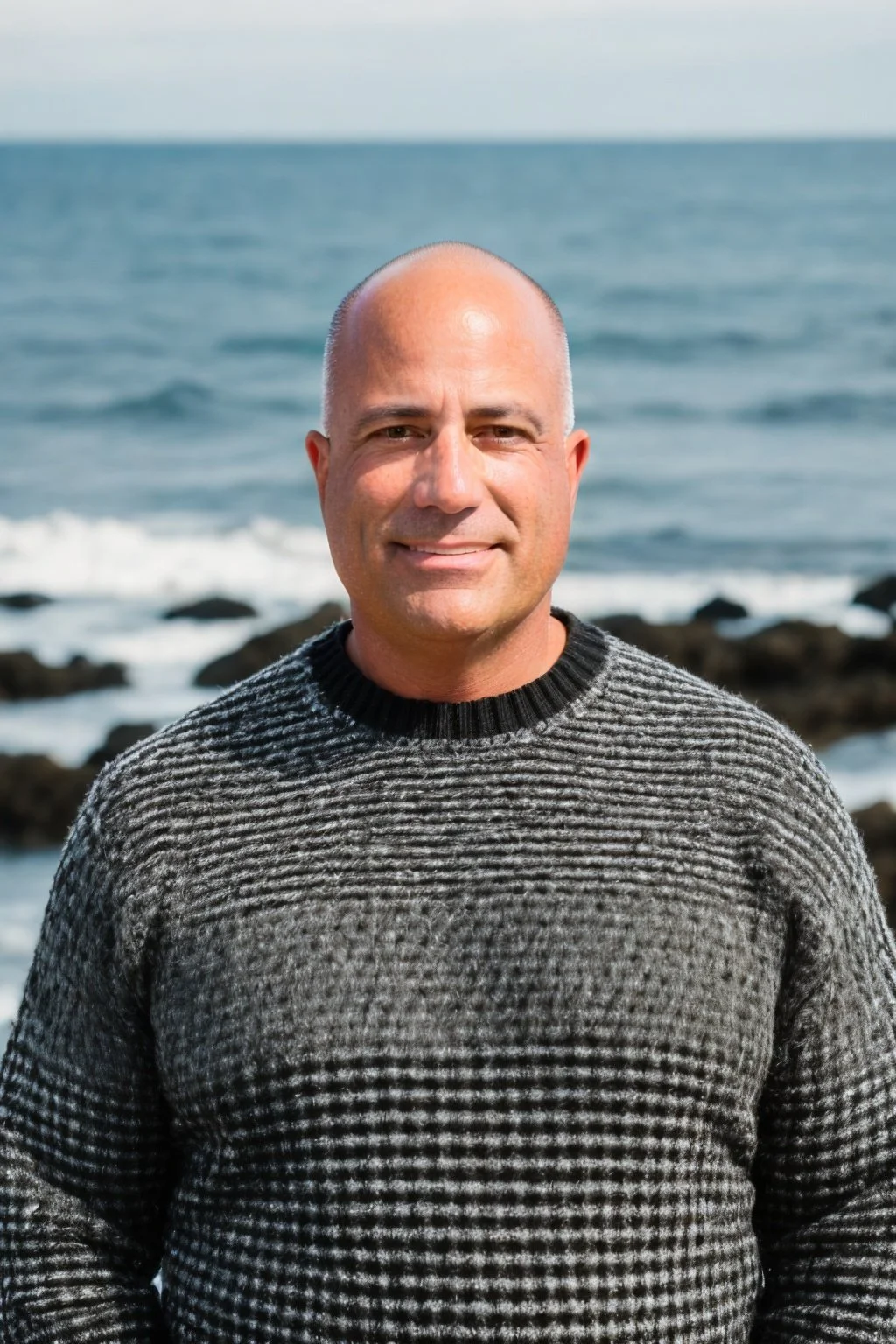
I'm a member of the generation I work with.
I came of age during the AIDS crisis. I watched friends die. I went to therapy because I needed help and knew it.
That's why I became a psychotherapist, and why this practice is for gay men in the second half of life.
How I came to this work
I'm a fourth-generation Californian. My family came west in a covered wagon and farmed in the Central Valley. I was a boy in the late sixties and seventies, and I knew something about myself before I had a word for it: that I was different from the other boys, and that it was supposed to be shameful. Nobody had to tell me.
Then, just as I was emerging from adolescence into young adulthood, reports of a new virus began to surface in the gay community — and so the years when I was becoming a man were the same years when everything around me was becoming frightening.
What I remember most is not knowing. Nobody could tell us what this was, or how it moved, or who would be taken next. And then young gay men I knew began to get sick, and then they began to die, and after a while, it stopped being extraordinary. I became acquainted with illness and death at an age when most people are only beginning to think about their lives. Wellness was the abnormal thing.
I went to therapy because I was frightened. I was in my early twenties and grappling with death — my own possible death, and the deaths of people I loved — and I had nowhere to put any of it. The therapists I found were kind and skilled, willing to stay in the wreckage with me rather than pull me away too quickly. That changed the course of my life. I found my footing in the work itself — volunteering with HIV organizations, learning the clinical skills this particular kind of suffering asks for, and discovering that I could actually help. Over time, I stopped thinking of it as a phase. It was just what I did, and what I wanted to keep doing.
So I became a psychotherapist, and I built my practice here, in my own community. Part of what I'm doing is trying to turn the difficulty of those years — the 1980s and 1990s and everything they cost us — into something useful. I can offer resilience where there's some to be had, and honesty about hope. And if you're facing a serious illness — including one that isn't going to get better — I'll stay with you.
Maybe it's depression that arrived late, or anxiety. Grief, a relationship, a retirement, or the question of what the rest of your life is supposed to be. Those years taught me how to stay with a man when the outcome isn't certain, and there's nothing obvious to fix — and how much it means just to be heard by someone who isn't going anywhere.
What the work is like
Men come to me with the diagnosis that rearranged everything, the grief that arrived out of order, the heaviness with no obvious source, the 3 a.m. question of what the coming years are actually for.
I keep my practice small on purpose. It means I know the men I work with, and I have room to think about them between sessions.
You don't have to arrive as a particular version of yourself. Whatever's true right now — the anger, the fear, the flatness you keep tucked away so nobody worries — there's room for it.
Some of what you bring won't be solvable, and I won't pretend otherwise. At a certain point, the work stops being about answers and becomes about how to live alongside a question: about who you are now, what you want the rest of this to look like, who you want beside you.
What I want for you is that you come to know more clearly what you value and find a way to live closer to it. Even now. Especially now.
About the Practice
Bob Basque, LCSW, is a psychotherapist in private practice in San Diego, California. He earned his Master of Social Work from Arizona State University. Starfish Mental Health is his solo practice, serving gay men in the second half of life.
Office — 1901 First Avenue, San Diego, CA 92101 (Bankers Hill)
Telehealth — Available to clients anywhere in California
Who I work with — Gay men, generally 50 and older, individually and with partners
Specialties — Depression and anxiety, serious and chronic illness, living with HIV, grief and loss, caregiving and partner support, alcohol use
Approach — Depth-oriented psychotherapy, integrating ACT, DBT, motivational interviewing, and harm reduction
Payment — In network with traditional Medicare, UnitedHealthcare/Optum, Aetna, and Anthem Blue Cross, billed directly. Medicare Advantage plans vary, and some allow out-of-network care. All other plans are private pay, with out-of-network claims filed through Mentaya, an insurance billing service. (see fees page for detailed information)
Contact — 760-523-9000 · hello@starfishmentalhealth.com
Training & Education.
Mental Health and Aging Specialist
Cancer and Serious Illness Specialist
Master of Social Work, Arizona State University
Licensed Clinical Social Worker - State of California - 110772
Gottman Method Training (Couples Therapy)
Certified Clinical Supervisor - providing guidance and mentorship to less experienced psychotherapists or graduate-level students